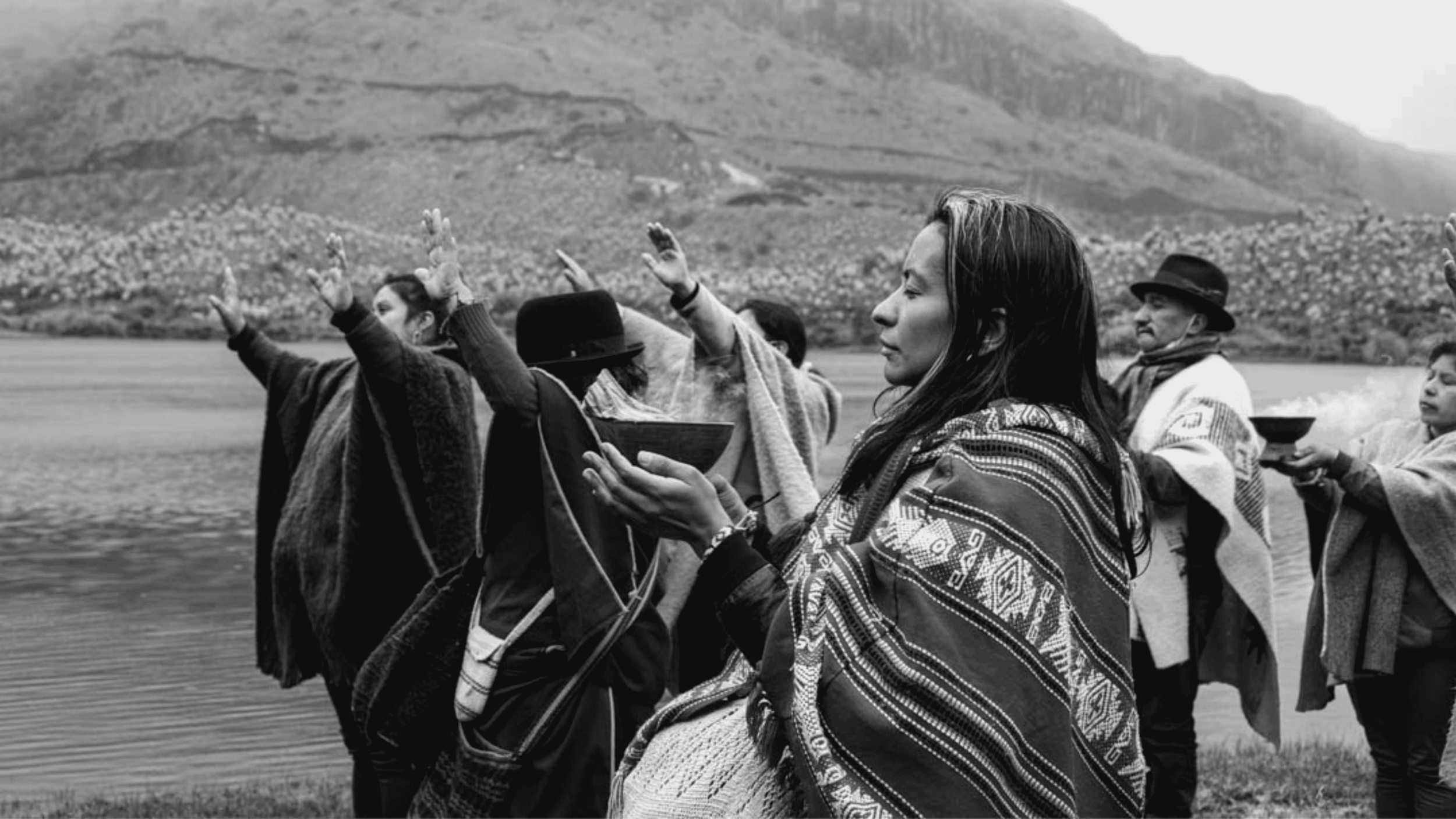
Modern Spirit Presents
Wisdom of the Sacred Womb and the Feminine Soul
A four-part online program for women walking the path of spiritual exploration and ancestral medicine.
This program weaves together Indigenous cosmology, energetic feminine physiology, and the wisdom of teacher plants to help women reconnect with the sacred architecture of their own bodies. Each class blends teaching, guided practice, journaling, and community sharing.
This program is designed for women seeking to:
Explore the feminine body as a spiritual and energetic map, not just a biological one.
Reframe women natural cycles as initiatory thresholds rather than problems to be managed.
Discover how various indigenous lineages honor the womb as an organ of memory, creation, and medicine.
Experience women’s circles as a technology of healing, rooted in reciprocity, active witnessing, and collective voice.
Cultivate a personal and communal relationship with plant allies as teachers of feminine wisdom.
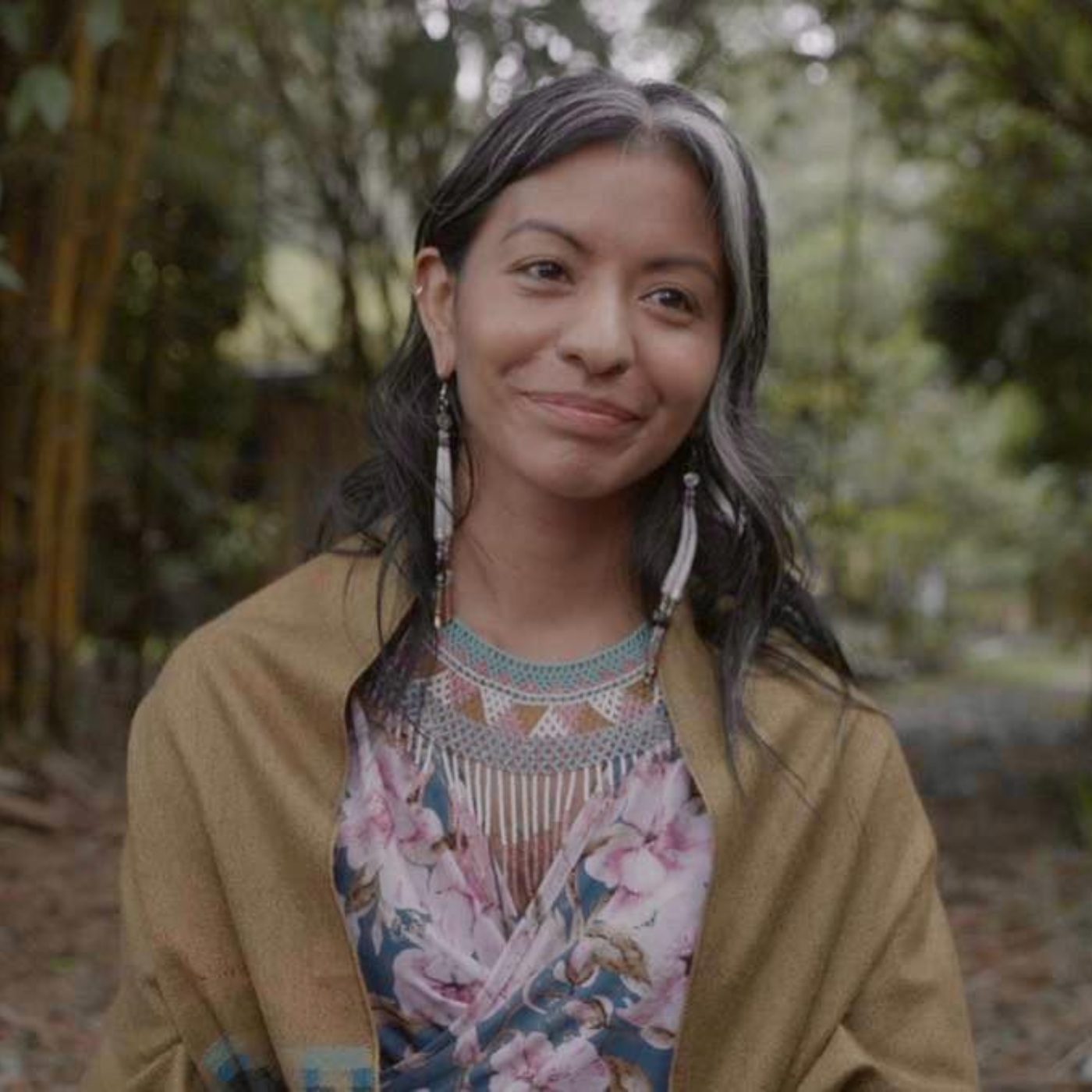
This Circle will be held by Xochi Bucuru
Xochi Bucuru Botache is a Colombian traditional healer, educator in the areas of health and human development, and promoter of Indigenous community projects.
Her learning about healing processes with ancestral medicines, particularly Yagé or Ayahuasca, began at the age of 14. From that moment, she has dedicated her life to the study, conservation, and service of ancestral and Indigenous knowledge.
Since 2009, she has been working as a traditional healer, and she received legal recognition by the Colombian Ministry of Culture in 2020 as a traditional doctor/medicine woman.
In 2021, she started collaborating with Modern Spirit and Dr. Joe Tafur, hosting and leading specialized online workshops and experiential retreats in Colombia for healthcare professionals as part of our Sacred Ceremony in Psychedelic Therapy Program.
For several years, she co-directed the nonprofit organization Cultural Tras La Huella and is now directing the nonprofit organization Kumay, continuing to promote and protect ancestral knowledge. She was co-producer and scriptwriter of the documentary Kumanday: The Way of the People and co-creator of the photo book Uchuamy.
In May 2024, she was officially recognized by the Indigenous Authorities of Colombia as a medicine carrier of the yagé altar and of feminine wisdom.
Schedule:
Four live zoom calls on Wednesdays from 6:00 – 8:30 PM PST
(October 21st to November 18th, with one week off)
Class 1: Wed, Oct 21
Class 2 Wed, Oct 28
Class 3: Wed, Nov 11
Class 4: Wed, Nov 18
Recordings Available for enrolled students
Each Session is scheduled for 2.5 hours and will include Class Structure the presentation on ancestral and integral health concepts and tools, and also guided discussion and immersion, including ritual, and ceremonial practice.
Homework:
Practices will be assigned between classes to integrate learnings.
Student Requirements:
"Camera On": Essential for connection.
Readiness: Must be available for movement and interaction (active listening).
Basic materials:
Journal and pen
A candle, some water, and a small altar space
Comfortable seat on the floor or ground contact if possible
Optional: a cup of an herbal infusion
Tuition cost: $500
$425 for students & Patreon members
(Limited Scholarships available)
Apply by October 20th
Curriculum Overview
-
Theme: Mapping the body as sacred territory
First Half — Teaching & Cosmology
Opening ceremony: lighting a candle, calling in the four directions and collective ancestral lineages.
Introduction to feminine spiritual anatomy across Indigenous traditions: the womb as "second heart," the pelvic bowl as a chalice/altar, the spine as the axis mundi.
The concept of energy bodies: how various lineages (Andean, Amazonian) describe subtle anatomy — chakras, (energy centers), or meridian-like pathways specific to women.
The plant as mirror: how master plants are traditionally understood to "read" the energy body and reveal blockages, wounds, or gifts.
Discussion: how colonization and modern medicine disconnected women from this anatomical/spiritual knowledge.
Second Half — Practice & Integration
Guided body-mapping meditation: journeying through the pelvic bowl, womb space, ovaries, breasts, and throat as a connected energetic line.
Journaling prompt: "Where in my body do I feel most disconnected? Most alive?"
Small-group sharing (breakout rooms, 3–4 women each).
Closing: gratitude round, one word each woman offers to the group.
Take-home practice: Daily 5-minute hand-on-womb breathing practice until next class.
-
Theme: The moon in the body — bleeding and the second spring
First Half — Teaching & Cosmology
The menstrual cycle as a lunar map: four inner seasons (menstruation, follicular, ovulation, luteal) and their correspondence to Indigenous seasonal/moon teachings.
Menstruation as ceremony: traditions of the moon lodge, red tent, or casa de la luna — women's withdrawal, rest, and visioning during bleeding time.
Reframing menopause: many Indigenous elders describe this transition not as an ending but as the "flowering," "second spring," or the time a woman becomes a Grandmother/Wisdom Keeper — the blood that once fed a child now feeds vision and community.
The plant teacher's role in these transitions: how certain plant allies are traditionally approached to ease transition, sharpen intuition, or mark rites of passage (taught conceptually and ceremonially — not as a dosing or medical guide).
Second Half — Practice & Integration
Guided visualization: meeting your inner moon lodge, or meeting your future self as an elder/Grandmother.
Cycle-mapping exercise: participants chart their own cycle (or their menopause journey) against the four-season framework.
Circle sharing: "What does my blood/my transition want to teach me?"
Closing ritual: symbolic release (writing and folding away what no longer serves this season of the body).
Take-home practice: Begin a simple cycle or transition journal, noting mood, dreams, and energy daily.
-
Theme: The womb as keeper of memory and creative fire
First Half — Teaching & Cosmology
The womb in Indigenous thought as more than reproductive: a seat of intuition, ancestral memory, creativity, and — in many traditions — a site where emotional and generational wounds are stored
Introduction to womb-centered healing practices found across cultures: abdominal massage traditions.
The concept of "womb clearing": how facilitators traditionally work with breath, sound, movement, and plant allies to release stagnant emotional or ancestral material — held here as an educational and ceremonial frame, not clinical instruction.
Boundaries and safety: what belongs to trained practitioners (hands-on bodywork, internal steaming, plant administration) versus what belongs in self-practice — a clear, honest conversation about scope.
Second Half — Practice & Integration
Guided self-practice: gentle external abdominal touch, breath, and voice/toning directed to the womb space (non-internal, self-administered only).
Sound healing element: humming, toning, or chanting to activate vibration in the pelvic bowl.
Journaling: "What has my womb been holding for me, my mother, or my grandmothers?"
Circle sharing (First groups of 3 or 4 women, then the collective).
Closing: a collective sound/toning offering, held by facilitator.
Take-home practice: Optional referral list for participants who want in-person womb bodywork with a qualified local practitioner. (This option applies if there is access to local women who are knowledgeable about womb wisdom; otherwise, an alternative activity will be suggested.)
-
Theme: Weaving the medicine forward — becoming circle keepers
First Half — Teaching & Cosmology
The circle as an Indigenous technology: no hierarchy, shared voice, the talking piece/staff tradition, and the circle as a container older than any single lineage.
How circles of women have historically held medicine, rites of passage, birth, grief, and celebration across cultures — the tertulia, the moon lodge, the minga, the sisterhood fire.
What makes a circle safe and sacred: consent, confidentiality, non-cross-talk, holding space without fixing.
Introduction to closing the full arc: integrating anatomy (Class 1), cycle wisdom (Class 2), and womb medicine (Class 3) into an ongoing personal and communal practice.
Second Half — Practice & Integration
Live practice circle: each woman is guided to hold the talking piece and share one transformation from the four classes.
Co-creating a "circle agreement" participants can take to start or join their own women's circles at home.
Ceremony of closing: each woman states one commitment to her own body-medicine practice going forward.
Final blessing and closing of the four-direction/opening call from Class 1.
Optional: invitation to an ongoing monthly circle or mentorship continuation.
Take-home practice: A printed/PDF "Circle Starter Kit" — opening/closing words, agreements, and a suggested format so each participant can convene her own circle.
Facilitator Notes
On plant medicine content: This program is designed to teach the cosmology, symbolism, and relational ethics around master plants and feminine medicine. It intentionally does not include dosing, preparation, or administration instructions for any psychoactive or medicinal plant — that knowledge belongs with trained, lineage-holding facilitators in ceremonial or clinical settings, and should be sourced separately and taught in person with appropriate safety screening.
On trauma sensitivity: Classes 2 and 3 in particular can surface grief, loss, fertility trauma, or ancestral pain. Consider having a co-facilitator or holding space trained in trauma-informed practice, and participants can always, as needed, opt-out from sharing.